Source High Speeding Ceramic Guide Pulley for Power Plant, Mining Transport, Grain Transport
Find 30 high speeding ceramic guide pulley options tailored for power plants, mining transport, and grain transport. Buyers can compare specifications like hardness, volume density, and polishing details from verified suppliers offering customization and ISO certifications.
Key considerations
Products List




Comprehensive Sourcing Guide
Strategic Sourcing Guide for High-Speeding Ceramic Guide Pulleys
The procurement of high-speeding ceramic guide pulleys represents a critical decision point for manufacturers in the wire and cable, mining, and chemical processing sectors. These components are engineered to manage tension and guide conductive materials with minimal friction and maximum durability. Unlike standard metal pulleys, ceramic variants offer superior resistance to wear, corrosion, and electrical conductivity issues, making them indispensable for high-precision applications. This guide synthesizes available product attributes and industry standards to provide a structured approach for buyers evaluating suppliers and specifications.
Technical Specifications and Material Performance
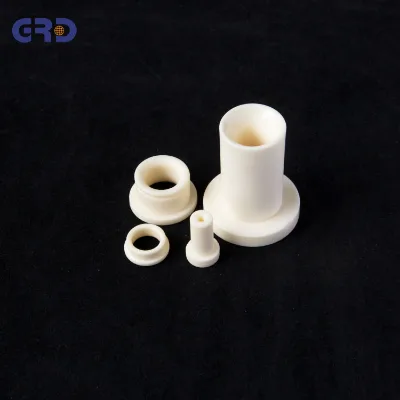
When evaluating a high-speeding ceramic guide pulley, the primary focus must be on the material integrity and geometric precision. The core material is often ceramic, characterized by a volume density of at least 3.88 g/cm³, which ensures structural rigidity under high rotational speeds. The hardness of the ceramic surface is a critical metric, with observed specifications indicating a hardness of greater than or equal to 89 HRA. This extreme hardness is essential for maintaining the integrity of the groove profile when guiding wires or cables at high velocities.
The manufacturing process involves low-pressure injection molding, a technique that allows for complex geometries and high consistency in the final product. The surface treatment typically includes oxygenation, which enhances the chemical stability of the ceramic. A fine polish degree with a roughness average (Ra) of 0.2 is often specified to minimize friction and prevent wire damage. The pulleys are available in various colors, including ivory, white, and red, which may serve as visual indicators for different grades or applications.
The physical dimensions and groove geometry are equally vital. The outer diameter can range from 50mm to 500mm, accommodating a wide spectrum of cable sizes. The groove type is typically categorized as U, V, or Arc, with the groove width usually designed to be 0.5mm to 2mm larger than the cable outer diameter to ensure smooth passage without binding. The groove depth is generally required to be at least half of the cable's outer diameter to provide adequate support. For specific applications, such as non-woven fabric equipment, the pulley must function to prevent the wire from jumping out, a feature achieved through precise polishing and high-speed bearing integration.
Compliance, Certification, and Quality Standards
In the industrial supply chain, verifying compliance is as important as the physical specifications. Buyers must confirm that suppliers possess valid certifications, with ISO and CE being the most frequently observed standards for these components. Specifically, ISO 9001 certification indicates a robust quality management system, ensuring that the manufacturing process adheres to international standards for consistency and reliability. The CE mark signifies that the product meets EU safety, health, and environmental protection requirements, which is crucial for equipment exported to European markets.
The condition of the product is typically listed as "New," and the warranty period is often standardized at 12 months. This warranty serves as a baseline for supplier confidence in the product's durability. However, buyers should not rely solely on the presence of a certification label; they must request documentation to verify the current status of these certifications. The standard for the product itself is often customizable, meaning that while general standards exist, specific project requirements may necessitate deviations that must be clearly defined in the purchase order.
Quality assurance should also extend to the production process. The processing type is identified as mechanical process with a precision finishing level, indicating that the final stages of manufacturing involve high-tolerance machining. The bearing component integrated into the pulley system is described as a "high-speeding bearing," which must be capable of withstanding the centrifugal forces generated during operation. The feature set includes precise polishing and high-speed bearing capabilities, which are non-negotiable for applications involving wire and cable factories or copper wire production.
Cost Drivers and Pricing Variables
The pricing of high-speeding ceramic guide pulleys is influenced by a complex interplay of factors, including material costs, customization levels, and order volume. The observed price range in the market spans from $0.02 to $300, reflecting the vast difference between standard off-the-shelf components and highly customized, large-diameter units. Several variables drive these costs:
| Cost Driver | Impact on Price | Verification Requirement |
|---|---|---|
| Material Composition | High | Verify volume density (≥3.88) and hardness (≥89 HRA). |
| Customization | Variable | Confirm if drawings are required or if standard models (NT-L, M, S, etc.) suffice. |
| Order Volume | Inverse | Check Minimum Order Quantity (MOQ) thresholds, typically 10 to 50 pieces. |
| Surface Finish | Moderate | Confirm Ra 0.2 polish degree and oxygenation treatment. |
| Packaging | Low | Verify if carton with foam packaging is included or optional. |
The Minimum Order Quantity (MOQ) is a significant cost driver, with observed ranges from 1 to 1000 units, though specific listings often cite 10 or 50 pieces as the baseline. For buyers requiring small batches, the unit cost will be higher due to setup and handling fees. Conversely, larger orders may benefit from economies of scale, though the total lead time must be managed carefully. The delivery time is often cited as 3 days for standard items, but this can extend significantly for customized models requiring specific drawing approvals.
Typical Applications and Operational Context
High-speeding ceramic guide pulleys are designed for environments where reliability and precision are paramount. The primary applications include wire and cable factories, copper wire factories, and wire drawing operations. In these settings, the pulleys guide the wire through various stages of processing, ensuring that the tension remains consistent and the wire does not deviate from its intended path. The function of preventing the wire from jumping out is critical in high-speed stranding machines, where a single deviation can cause production stoppages or material waste.
Beyond the wire industry, these pulleys are utilized in power plants, mining transport systems, grain transport, and the chemical industry. In mining and power generation, the ceramic material's resistance to corrosion and wear is essential for handling abrasive materials or operating in harsh environments. The chemical industry benefits from the inert nature of the ceramic, which prevents contamination of sensitive processes. The product is also compatible with non-woven fabric equipment, highlighting its versatility across different manufacturing sectors.
The driven type for these systems is typically electric, and the automatic grade is classified as automatic, indicating integration into automated production lines. The molding method, low-pressure injection, allows for the creation of complex shapes that can be tailored to specific machinery requirements. The screw diameter options, ranging from M2 to M5, suggest that these pulleys are part of a larger assembly where fastening and alignment are critical.
Supplier Evaluation and Verification Protocols
Selecting the right supplier requires a rigorous evaluation process that goes beyond price comparison. Buyers should prioritize suppliers who demonstrate a clear understanding of the technical specifications, particularly the hardness, density, and polishing standards. The ability to customize the product according to customer drawings is a strong indicator of a supplier's technical capability. Models such as NT-L, M, S, 01, 02, 03, 04, 05, 06, 07, 08, 20, and 22 are available, but the supplier must confirm the availability of specific dimensions and groove types.
The origin of the product is a key factor, with China being the primary source for these components. Buyers should verify the supplier's location and logistics capabilities, as the lead time and shipping costs can vary significantly. The processing trade type, "processing with material supplied," indicates that some suppliers may require the buyer to provide specific raw materials, while others may offer a full-service solution. This distinction affects the supply chain risk and the buyer's control over material quality.
Quality control should be a collaborative effort. Buyers should request test results or inspection reports that verify the product's adherence to the stated standards. The warranty period of 12 months is a standard offering, but the terms of the warranty should be clearly understood, including coverage for manufacturing defects versus wear and tear. The brand "Ztf" is mentioned in some contexts, but buyers should not limit their search to a single brand; instead, they should evaluate the supplier's overall reputation and track record.
Long-Term Procurement and Lifecycle Management
Sourcing high-speeding ceramic guide pulleys is not a one-time transaction but a long-term partnership that impacts operational efficiency. The mold life, often cited as greater than 000 shots, suggests a high durability, but buyers must verify the actual lifespan in their specific operating conditions. The precision finishing level ensures that the pulleys maintain their performance over time, reducing the frequency of replacements and minimizing downtime.
Packaging is another consideration for long-term procurement. The standard packaging of "carton with foam" protects the pulleys during transit, but buyers should ensure that the packaging is sufficient for the specific shipping conditions, especially for international orders. The package size of 0.44cm * 0.44cm * 0.20cm is extremely small, which may indicate a specific component or a sample size, and buyers should clarify the actual dimensions of the packaged product to avoid logistics issues.
In conclusion, the procurement of high-speeding ceramic guide pulleys requires a balanced approach that considers technical specifications, compliance, cost, and supplier reliability. By focusing on the verified attributes such as volume density, hardness, and certification status, buyers can make informed decisions that enhance the performance and longevity of their industrial equipment. The customization options and wide range of applications make these pulleys a versatile solution for modern manufacturing challenges, provided that the buyer conducts thorough due diligence and maintains clear communication with their suppliers.
FAQs
What certifications do high speeding ceramic guide pulleys have?
These pulleys typically hold ISO and CE certifications to ensure safety and quality. Some listings also specify ISO9001 compliance, confirming a robust quality management system for consistent manufacturing standards.
How fast can these ceramic pulleys operate?
They are designed for high-speed applications with integrated high-speed bearings. This feature prevents wire jumping and ensures precise polishing is maintained even during rapid rotation in wire and cable factories.
What is the minimum order quantity for these pulleys?
The minimum order quantity varies, with observed values ranging from 10 to 50 pieces depending on the specific model. Buyers should verify the exact MOQ as some listings allow orders as low as one unit.
Can these pulleys be customized according to drawings?
Yes, customization is available and models can be adjusted based on customer drawings. The product standard is also customizable, allowing for specific dimensions like groove width and depth to match unique machinery requirements.
What is the delivery time for standard orders?
The standard delivery time is typically three days for ready stock items. However, lead times may extend for customized models requiring specific processing or material supply arrangements from the manufacturer.
Which industries use these high-speeding ceramic guide pulleys?
They are widely used in wire and cable factories, power plants, and the chemical industry. Mining transport and grain transport sectors also utilize them for their resistance to wear and corrosion in harsh environments.